CÔNG TY CỔ PHẦN GIẢI PHÁP TỰ ĐỘNG HÓA ETEK | ETEK INTRALOGISTICS



Industrial Conveyor Systems – A Modern Material Handling Solution for Factories
1. What Is an Industrial Conveyor System?
An industrial conveyor system is a mechanical and automated equipment system used to transport raw materials, semi-finished goods, or finished products between different areas within a factory. Instead of relying on manual handling, conveyors enable a continuous, stable, and controlled flow of products.

In modern manufacturing, conveyors no longer operate independently. They are often integrated into factory-wide conveyor systems and play a critical role in intralogistics (internal material handling) for enterprises.
2. Why Are Industrial Conveyor Systems Becoming Increasingly Important?
Investing in industrial conveyor systems brings significant practical benefits to factories:
- Improved operational efficiency: Reduced waiting time between production stages
- Lower labor costs and enhanced workplace safety: Less manual handling
- Consistent product quality: Minimized damage and misalignment
- Easier process standardization: Well suited for lean manufacturing models
Especially when combined with automated conveyor systems, industrial conveyors help businesses move closer to the smart factory model.
3. Common Types of Industrial Conveyors and Their Applications
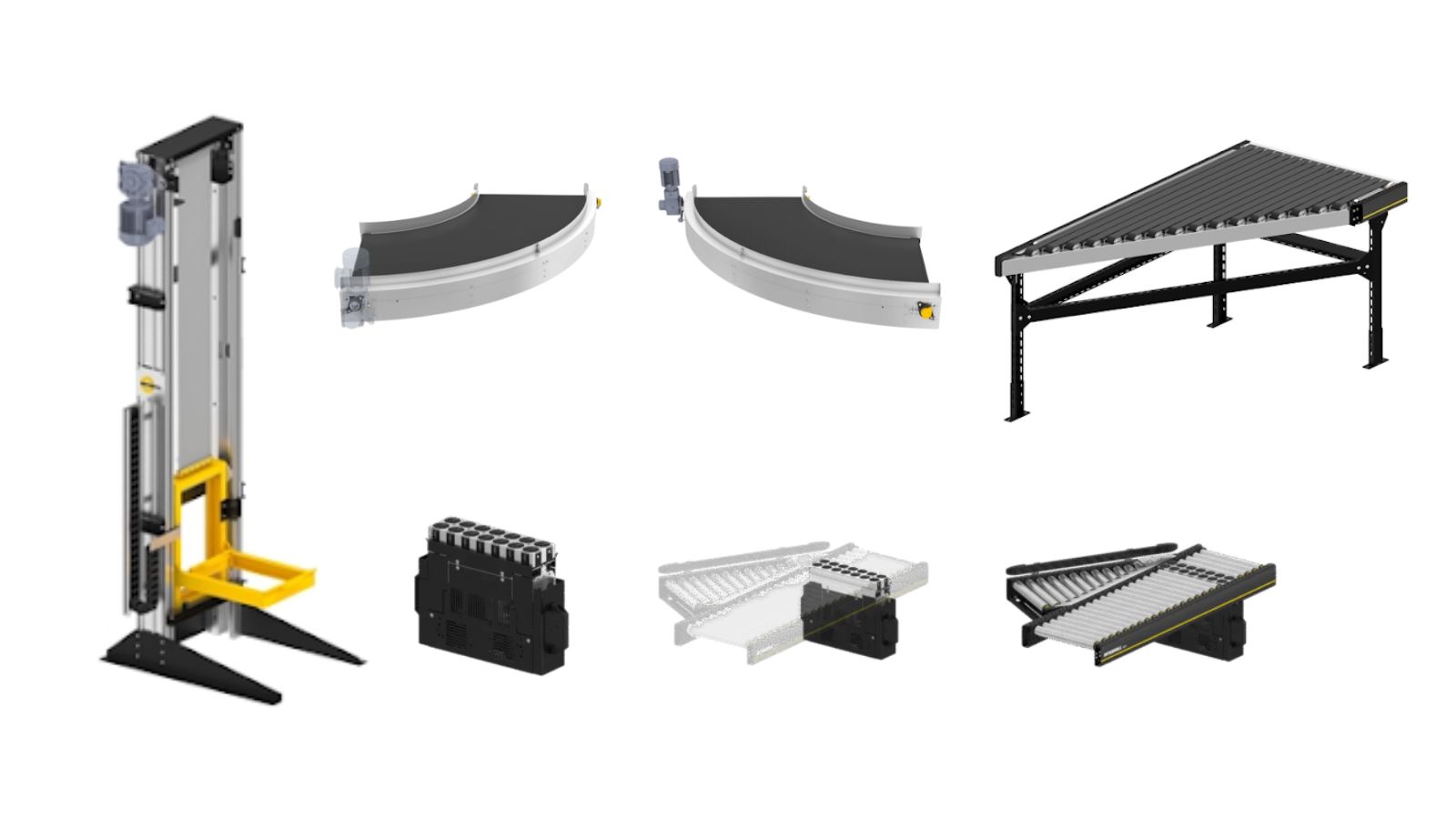
Depending on product type, load capacity, and factory layout, industrial conveyors are designed in various configurations.
3.1. Belt Conveyor
Belt conveyors use belts made of PVC, PU, or rubber to transport products continuously. Products are placed directly on the belt surface, while a motor drives the belt at a stable speed.
Suitable for:
- Carton boxes
- Plastic trays and packaged goods
- Light to medium loads
Typical applications:
- Assembly lines
- Packaging and inspection areas
- F&B and electronics factories
3.2. Roller Conveyor
Roller conveyors consist of parallel rollers, which can be gravity rollers or motor-driven rollers. Products move across the rollers by pushing force, gravity, or motorized drive.
Suitable for:
- Flat-bottom cartons
- Pallets and metal trays
- Heavy-duty loads
Typical applications:
- Finished goods warehouses
- Palletizing and consolidation areas
- Intralogistics conveyor systems in logistics operations
3.3. Plastic Chain Conveyor
Plastic chain conveyors are a type of industrial conveyor that uses engineered plastic chains instead of traditional metal chains. They are designed to transport light to medium products requiring high stability, smooth operation, and cleanliness.
Plastic chain conveyors are especially suitable for:
-
Bottles, jars, cans, and containers made of plastic or glass
-
Small boxes and product trays
-
Packaged products that must maintain proper orientation during transport
The system ensures stable movement without slipping or tilting, even at high speeds.
Learn more about plastic chain conveyors: HERE
3.4. Overhead Conveyor / Hanging Conveyor
An overhead conveyor is a specialized industrial conveyor system in which products are hooked, suspended, or fixed to dedicated hangers. The chain or rail system moves continuously above the floor, guiding products through each process step according to a predefined sequence, instead of transporting them on the factory floor.
Overhead conveyors can operate: In straight lines or closed loops, with curves, elevation changes, and flexible branching
- They are particularly suitable for products that:
- Can be hung or securely suspended
- Require full-surface treatment
- Are large or bulky
Examples include metal frames, automotive and motorcycle components, mechanical parts, and painted or coated products.Watch how an overhead conveyor operates in a coating line in the video below:
4. Industrial Conveyors in Modern Intralogistics Systems
In intralogistics, industrial conveyor systems connect key factory areas, from raw material warehouses and production zones to packaging, sorting, and finished goods storage.
When integrated with AGVs/AMRs, robots, and warehouse management software, conveyor systems help to:
- Optimize material flow
- Reduce internal transportation time
- Improve visibility, control, and traceability
5. Key Factors to Consider When Investing in Industrial Conveyor Systems
To ensure long-term operational efficiency, businesses should consider:
- Product type and load capacity
- Factory space and layout
- Desired level of automation
- Future scalability
- Safety and maintenance requirements
A properly designed industrial conveyor system from the outset can significantly reduce future modification costs, enhance productivity, and prepare businesses for the transition toward smart manufacturing.