CÔNG TY CỔ PHẦN GIẢI PHÁP TỰ ĐỘNG HÓA ETEK | ETEK INTRALOGISTICS



Ideal Preparation for Implementing a Pallet Conveyor System
These are situations many material handling businesses face every year:
- Existing systems are outdated, worn down, and pose safety risks
- Manual conveyor solutions are obsolete, inefficient, and costly to operate
- Capacity needs to be expanded to meet growing throughput demands
- A new system is required for a warehouse or production line to optimize costs
Regardless of whether the goal is upgrading, replacing, or building from scratch, automated pallet handling solutions consistently deliver strong performance in terms of efficiency, cost control, and safety. However, implementing such a system remains a significant challenge—even for experienced organizations.
It is not always clear where to start (Which type of conveyor is needed?), what benefits the new system will deliver (Will it support sustainability goals?), or who should be involved in the implementation (Direct installation by the manufacturer or via a third party?).

Why Choose Automation?
When planning an automated pallet conveyor system, the first key question is: Why automate?
The answer lies in the system’s ability to fundamentally transform pallet handling operations. Automated conveyors meet growing demands in logistics, retail, and e-commerce by increasing throughput and reducing reliance on manual labor. At the same time, they improve operational efficiency, safety, and cost control—addressing the inherent limitations of manual or semi-automated pallet handling.
For example, automated conveyors using Zero Pressure Accumulation (ZPA) technology ensure optimal spacing between pallets, prevent congestion, maximize throughput, and eliminate collision-related safety risks.
Throughput Optimization Goes Hand in Hand with Energy Savings
Because ZPA systems operate only when pallets are present—rather than running continuously like traditional belt conveyors—energy consumption can be reduced significantly, by up to 50% when using ZPA drive modules.
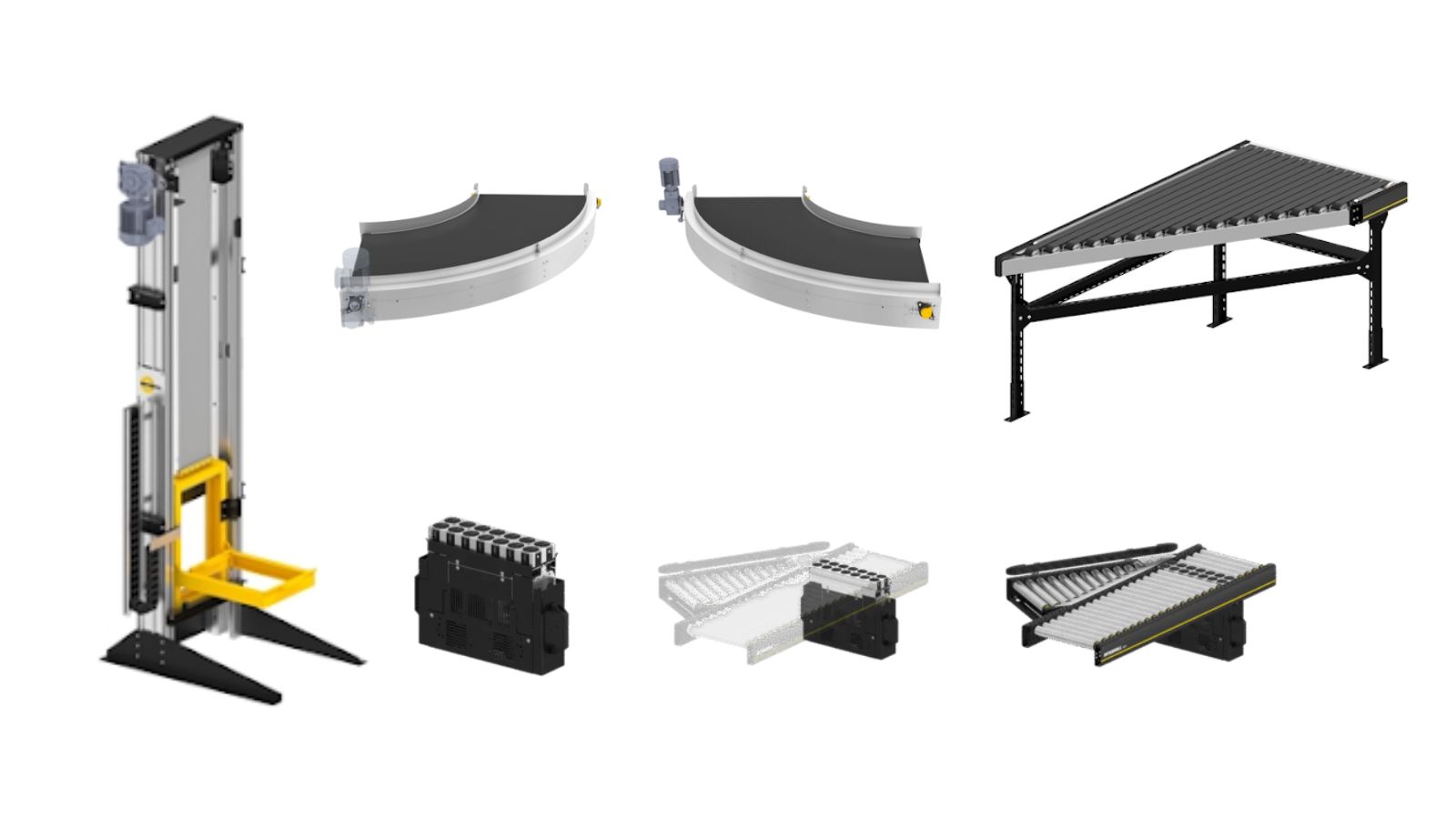
Modular design provides further advantages. Modular automated pallet conveyor platforms, such as the ETEK Modular Pallet Conveyor Platform, offer high flexibility and scalability, simplify integration, and make system design, installation, and maintenance more efficient.
According to a 2023 survey by the Fraunhofer IML Institute (Germany), logistics managers prioritize automated pallet handling solutions that are:
- Proven, reliable, and durable
- Applicable across multiple markets
- Easy to design and quick to install
- Simple to operate, commission, and maintain
Who Is Involved in the Implementation Process?
Once system requirements and objectives are defined, the next step is understanding the key stakeholders and their roles. Most projects involve three main parties:
1. End User
The end user defines system requirements and works with other stakeholders to clarify technical constraints. After installation, they are responsible for system operation, often supported by an operations or maintenance agreement with the system integrator.
2. System Integrator (SI)
Most companies work with a system integrator—often acting as the main contractor. The SI is responsible for:
- System design calculations (dimensions, capacity, throughput, etc.)
- Ordering and installing the conveyor system
- Integrating the system with the Warehouse Management System (WMS)
- Providing maintenance services, depending on contractual scope
In many cases, the SI is also the direct customer of the equipment manufacturer.
3. Manufacturer
The manufacturer supplies conveyor modules according to the agreed schedule and supports planning with design tools such as CAD. Depending on the project, the manufacturer may also participate in parts of the installation process.
Typically, each party appoints a project manager, and all stakeholders coordinate closely to oversee the entire implementation.
Ready to Implement?
Final pre-implementation steps include confirming the budget, timeline, and clearly defining responsibilities among all parties, based on the chosen implementation strategy. Once these elements are in place, the project is ready to move into execution.
It is important to note that there is no one-size-fits-all roadmap. Each project follows a unique path. Our implementation guide explores these options in detail and outlines five critical phases for successful deployment—from planning and design to commissioning and system optimization—along with practical recommendations for overcoming key challenges at each stage.